
 |
Research Article
Adverse effects of tuberculosis on voice in Bangladesh
1 Speech and Language Therapist, Centre for the Rehabilitation of the Paralysed (CRP), Savar, Dhaka 1343, Bangladesh
2 Assistant Professor, Speech and Language Therapy Department, Bangladesh Health Professions Institute (BHPI), the Academic Institute of Centre for the Rehabilitation of the Paralysed (CRP), Savar, Dhaka 1343, Bangladesh
3 Senior Medical Officer, Infectious Disease Division (ACTB Project), icddr,b, Dhaka, Bangladesh
Address correspondence to:
Rabeya Israt Oeshy
CRP, Chapain, Savar, Dhaka 1343,
Bangladesh
Message to Corresponding Author
Article ID: 100060D05RO2026
Access full text article on other devices

Access PDF of article on other devices


How to cite this article
Oeshy RI, Parvez N, Islam MS. Adverse effects of tuberculosis on voice in Bangladesh. Edorium J Disabil Rehabil 2026;11(2):1–7.ABSTRACT
Aims: This study aimed to assess severity of voice disorders among tuberculosis (TB) patients and to explore pulmonologists’ perceptions regarding the role of speech and language therapy in TB-related voice disorders.
Methods: A mixed-methods embedded design was employed. A total of 186 TB patients were selected using random sampling, and 5 pulmonologists were recruited purposively. Voice Handicap Index-30 (VHI-30) and a demographic questionnaire were used for quantitative data collection, while a self-structured open-ended questionnaire was used for qualitative data from pulmonologists. Quantitative data were analyzed using descriptive statistics, and qualitative data were examined through content analysis.
Results: The study population comprised 61.8% males and 38.2% females, with the largest age group being 18–28 years (29%). Pulmonary TB was present in 86% of participants. Based on VHI-30 scores, 75.8% had mild, 21% moderate, and 3.2% severe voice handicap. The mean VHI-30 score was 18.42 ± 17.14. Smoking history, odynophagia, and prior voice problems showed associations with increased voice impairment. Loss of appetite was reported by 61% of the participants. Anti-tubercular therapy was associated with improvement in voice-related outcomes. Qualitative findings indicated variability in pulmonologists’ awareness and understanding of the role of speech and language therapists in the management of tuberculosis-related voice disorders.
Conclusion: Tuberculosis has a measurable impact on vocal function, with most patients demonstrating mild to moderate voice impairment. Lifestyle and clinical factors such as smoking and odynophagia contribute to severity. However, the findings underscore the importance of enhancing knowledge of speech and language therapy among pulmonologists to facilitate interdisciplinary cooperation and optimize patient outcomes.
Keywords: Odynophagia, Pulmonologists, Speech and language therapy, Tuberculosis, Voice disorder
Introduction
The most deadly infectious illness globally, tuberculosis (TB), is caused by Mycobacterium tuberculosis. For a long time, Bangladesh has dealt with this public health concern [1]. There are millions of tuberculosis sufferers all over the world. Of the 10.8 million cases documented by the World Health Organization, 6 million were men, 3.6 million were women, and 1.3 million were children [2]. That year the illness claimed 1.25 million lives, including 161,000 for HIV co-infection [3]. Every country and people suffer from tuberculosis. Of the 30 countries with high TB rates, Bangladesh accounts for 3.6% of the worldwide total [4]. With 221 per 100,000 incidence rate, Bangladesh has a 24 per 100,000 death rate. About 80% of TB sufferers in this area are pulmonary [4],[5].
Though it can potentially impact other bodily areas, TB primarily affects the lungs [6]. The most frequent are pleural, peritoneal, pericardial, lymphatic, laryngeal, genitourinary, adrenal, bone, meningeal, intestinal, and cutaneous extrapulmonary tuberculosis (EPTB) [7]. Head and neck TB lesions appear in ten percent of cases. The second most frequent head and neck site for extra-pulmonary TB is the larynx [8]. Studies have shown that pulmonary is common with dysphonia [9]. Among the symptoms are hoarseness and vocal production anomalies caused by insufficient respiratory assistance.
Though uncommon, TB is nevertheless a frequent larynx granulomatous disease [10]. Dysphonia symptoms in laryngeal tuberculosis patient with rifampicin-resistant TB have been seen in recent decades [11]. Hoarseness of voice is a typical sign of lung, thyroid, esophageal, cardiac, and TB. Vocal Cord Paralysis (VCP) is also prevalent in tuberculosis [12].
Air pressure, vibratory, and resonant mechanics define voice creation. While the respiratory system comprises the lungs, diaphragm, and intercostal muscles, the vibrating system has vocal folds. Intrinsic laryngeal muscles govern the glottis and voice folds save for the cricothyroid muscle. More than 80% of tuberculosis sufferers suffer from persistent lung damage. Of the patients, 86.8% have airflow limitation. Over time, the structural abnormalities in 76.8% of lung damage patients can produce symptoms [13],[14].
Pulmonary tuberculosis (PTB) initially presented by voice change is very rare. Few studies have looked at how TB changes voice [15]. Studies on tuberculosis patients’ laryngeal involvement ignore vocal rehabilitation. There is little long-term data on voice quality and utility from surgery and vocal therapy [16]. Research suggests that dysphonia is the main symptom of laryngeal tuberculosis. Dysphonia is found to be present in 96.6% of LTB cases [17]. Voice quality following anti-tuberculosis treatment was objectively assessed using acoustic analysis.
Because of a focus on acute clinical symptoms and a lack of longitudinal data, voice abnormalities in PTB and EPTB patients are hardly researched. This complicates the explanation of voice dysfunction development and healing in this patient group. After a voice disorder, practical issues include limited awareness of voice disorders among tuberculosis (TB) physicians, which leads to no voice disorder rehabilitation programs for TB patients, and lower voice-related quality of life and communication problems [18],[19]. Knowing TB’s several kinds will enable us to treat and identify it early. This case is being reported to raise knowledge of the symptoms of PTB and whether anti-tuberculous medication can cure them [18]. Addressing these issues calls for large-scale, longitudinal studies, pulmonologist expertise, and socio-economic advancements to specialized voice therapy. Knowing TB’s several kinds will enable us to treat and identify it early.
International professional standards advise speech and language therapy for upper airway disorders. Multidisciplinary team (MDT) ear, nose, and throat specialists (ENTs) should manage dysphonia, cough, dyspnea, and other respiratory symptoms according to Royal College of Speech and Language Therapist (RCSLT) recommendations. A respiratory doctor has to assess the patient in a specific upper airways MDT clinic or uniprofessional environment before speech and language therapy (SLT) intervention. Professionals should handle disturbing symptoms such as prolonged blocked breathing or hemoptysis and guide patients down the appropriate courses. Several research advocate therapy-based SLT treatment for upper airway dysfunction [10]. But, holistic tuberculosis treatment calls for speech and language therapists. Upper airway disorders use a lot of healthcare, which uses up resources and worsens patient suffering. Though it is undoubtedly significant, there is no solid evidence on the financial effect. Speech-language therapy raises quality of life as recorded by patients [20],[21]. International professional standards advise speech and language therapy for upper airway disorders [10],[22]. Across MDT teams, respiratory service SLTs assess, diagnose, plan, treat, and release complicated upper airway problem patients. From the “gold standard” [23], patients learn to recognize symptoms and optimize the efficacy of medical treatments. Anti-tuberculosis drugs help to improve it [24].
This paper looks at how anti-tubercular treatment (ATT) and tuberculosis influence voice quality and pulmonologists’ opinions on the participation of speech and language therapy in inter-disciplinary team work.
MATERIALS AND METHODS
The investigators conducted this study to identify the effects of tuberculosis on voice and Pulmonologists perception about the role of Speech and Language Therapy. The study was conducted in National Institute of Diseases of the Chest and Hospital (NIDCH), Mohakhali, Dhaka and 250 Bedded TB Hospital, Shyamoli, Dhaka (NIDCH). Investigators used Hospital Randomized Sampling from the quantitative population who met the inclusion criteria are recruited in the study [25]. Purposive sampling was used for the qualitative study [26]. For the quantitative study, the investigator used a validated questionnaire (self-statement) Voice Handicap Index-30 (VHI-30) as data collection instrument, along with a self-made Questionnaire to collect socio-demographic information [27]. The Bangla questionnaire was used to collect information from participants during the interview.
For the qualitative part, a self-made questionnaire including a demographic information section was used to collect data from pulmonologists. During the interview a recorder was used to note the conversation. The investigator collected data from participants using the Voice Handicap Index-30 (VHI-30). The questionnaire consists of 30 items rated on a 5-point scale ranging from 0 (never) to 4 (always). The VHI-30 generates a total score ranging from 0 to 120 and three subscale scores: functional, physical, and emotional, each ranging from 0 to 40 [27]. Higher scores indicate greater perceived voice handicap. A total VHI-30 score of 30 or higher was considered indicative of a voice-related problem. Investigator assisted the participants to complete the questionnaire who had lower literacy levels.
In the qualitative component, Investigator explained the interview process and asked questions from the participant in face-to-face interview method. It took around 5–10 minutes for each participant.
The investigators collected data from the participants through face-to-face interview. The investigators used descriptive statistics for data analysis because descriptive statistics is commonly used to survey data and it requires large quantities of data. Descriptive analysis allows the investigators to describe large number of information with few words. Data were analyzed through the software named Statistical Package for Social Science (SPSS) [24],[28]. Descriptive statistics is commonly used to describe, organize, and summarize data and also used for describing survey data. In qualitative component of the study, the data were translated from English to Bangla and content analysis was conducted based on the frequency of repeated words or phrases identified during interviews. A theme aligned with the interview question after establishing coding categories [29]. At first, the investigators took permission from Speech and Language Therapy Department of Bangladesh Health Professions Institute and then from the authority of NIDCH and 250 Bedded TB Hospital for data collection. Then the investigators went to the study place with consent form and VHI-30 questionnaire. They explained the participants about the purpose of the study and also ensured them that any personal information would not be published anywhere. The investigators used descriptive statistics for quantitative data analysis. Data were analyzed through the Statistical Package for Social Science (SPSS) software [24]. Content analysis was used to analyze data for the qualitative part [28],[29],[30]. The study was approved by the Institutional Review Board (IRB) of Bangladesh Health Professions Institute (BHPI) (CRP/BHPI/IRB/09/2024/927), the academic Institute of Centre for the Rehabilitation of the Paralysed. Voluntary participation of the participants was considered. Participants were provided with a written consent form. The investigators collected the written permission to conduct the research from the participants. The participants were informed verbally about the aims and objectives of the study and the investigators’ role as well.
RESULTS
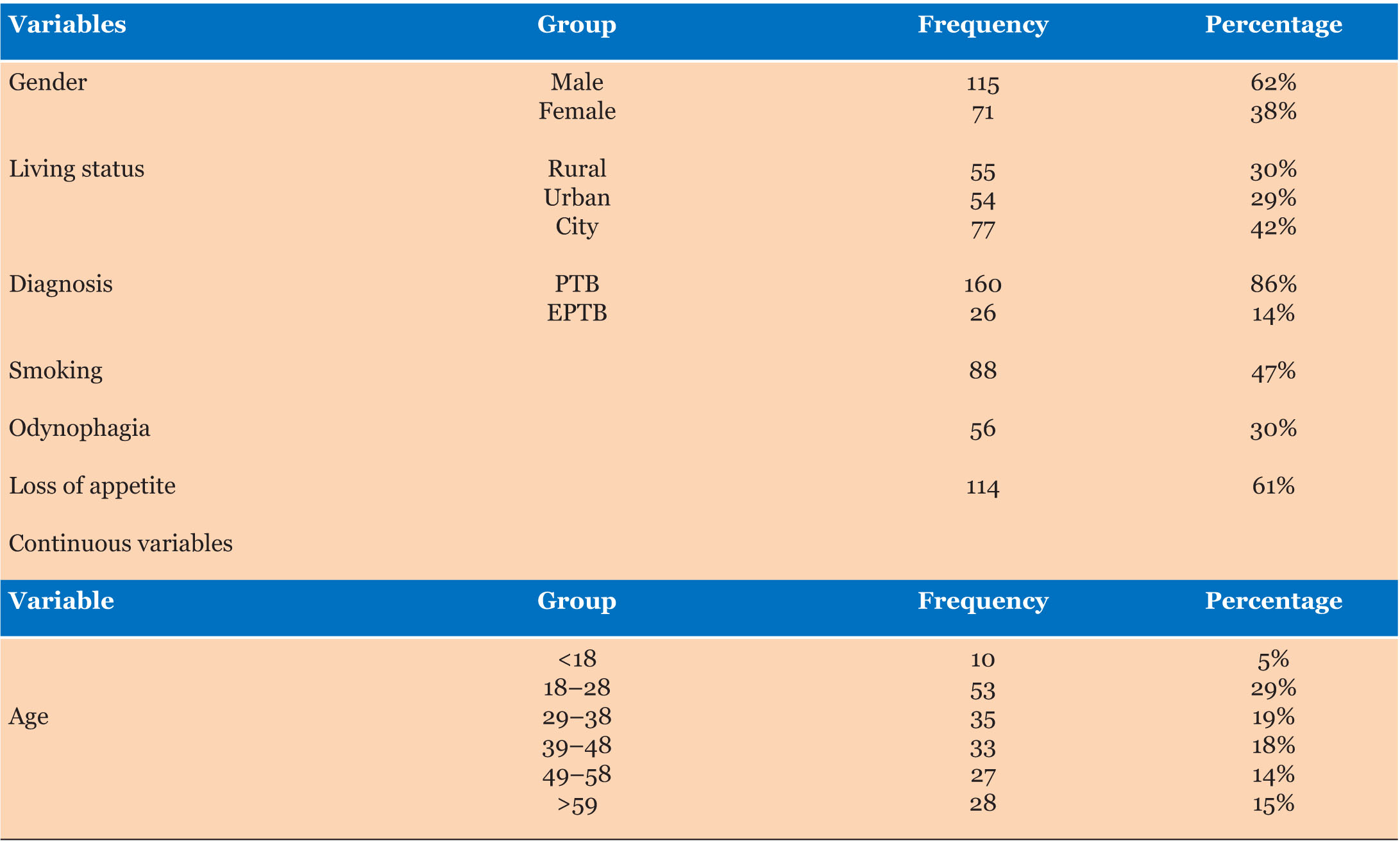
This is a mixed embedded designed study, the quantitative part is a descriptive cross-sectional study including 186 patients with confirmed TB diagnosis. The patients aged from 14 to 75, with a mean of 44.5 years. The most severe cases were observed on patient group 29–38 with 4.8% moderate and 1.6% severe cases. Male participants were more prevalent to tuberculosis 62% (115) and voice disorder as well accounting 2.7% (5) severe voice disorder (Table 1).
The mean total VHI-30 score was 18.42 ± 17.14 (SD), with a range of 0–88. Severity of voice disorder among 186 participants according to VHI-30, Mild voice disorder was present at 75.80% (141) of the total participants. Moderate voice disorder was observed among 21% (39) of them and severe cases were at the rate of 3.20% (6) (Figure 1).
In this study, the number of PTB cases were 86% (160). Where only 14% population was diagnosed with EPTB. Among the 14% of diagnosed EPTB patients, Miliary TB, TB Meningitis was in 2% of the total participants. Tuberculosis lymphadenitis and laryngeal TB was prevalent in 1% of cases. Central nervous system (CNS) tuberculosis was in 3% of cases other 5% had a variety of other types of tuberculosis (Table 1).
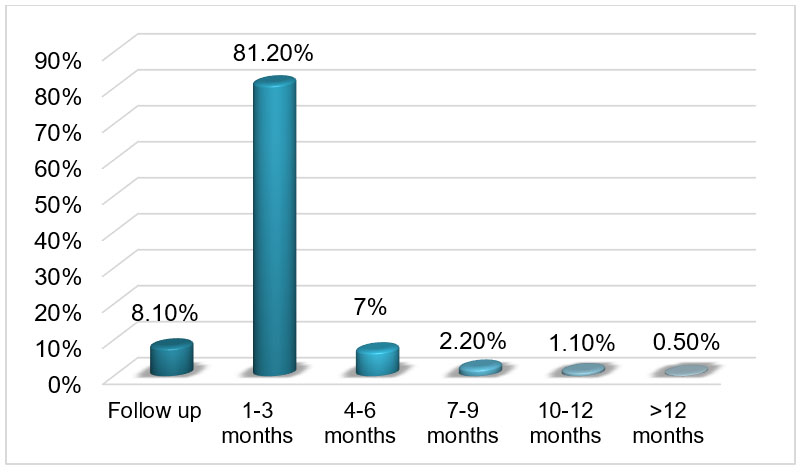
As per this study, duration of consuming ATT drugs had a significant impact on the participants. People who are on follow-up had 8% of voice disorder, comprising 0% severe case, 1.1% moderate cases, and 7% mild cases, which suggest that ATT had a good impact on improving participants’ voice quality. Participants who had the most severe voice disorder cases were at the duration on 1–3 months on drug (Figure 2). Association between smoking habit and severity of voice disorder was examined using chi square tests. The association was statistically significant (p<0.05) (Table 2).
Odynophagia, a common clinical feature for PTB and EPTB. Among the patients with severe voice disorders, 2.2% also experienced odynophagia, and this association was found to be statistically significant. Additionally, 9.1% of patients with moderate voice disorders experienced odynophagia (Table 3). Presence of anorexia was observed in 61.30% of cases (Table 1).



Discussion
Tuberculosis is a highly infectious disease caused by a bacteria called Mycobacterium Tuberculosis. Pulmonary tuberculosis is the most common type of TB. Among the other groups, laryngeal TB has the prevalence of 1% in recent decades [24]. Voice disorder or changes in voice quality is common in PTB along with laryngeal TB [8],[9],[18]. This study was a mixed type embedded designed study. The aim of this investigation was to identify the severity of voice disorder among TB population and perception of Pulmonologists about the role of Speech and Language Therapy. Total participants for the quantitative study were 186. VHI-30 was used as a data collection tool. A total of five participants were included in the qualitative phase of the study. Data were collected using a self-structured open-ended questionnaire. The mean VHI-30 score observed in the present study (18.42 ± 17.14) was higher than the mean score reported among healthy controls by Miaskiewicz et al. (7.16 ± 9.02), suggesting that tuberculosis may have a measurable impact on perceived vocal function. However, the mean score in the present study was considerably lower than that reported among patients with established voice disorders (49.11 ± 25.67) [31].
Like other studies on tuberculosis and voice disorder, we found a higher incidence of tuberculosis and severe voice disorder in males [8],[9],[17],[18],[24]. The patient aged from 14 to 75, with a mean of 44.5 years. The most severe cases were observed on patient group 29–38 with 4.8% moderate and 1.6% severe cases. The average age group is similar to previous studies on this area [24]. Laryngeal tuberculosis was prevalent in 1% of the total cases. It has been stated that the laryngeal area most frequently affected by tuberculosis is the true vocal folds and posterior commissure [17]. It is found on different studies, dysphonia is the main symptom of laryngeal TB, followed by odynophagia, dysphagia and cough [8],[9],[17]. In the study, 17.7% of the TB population identified themselves as having moderate voice disorder and 2.7% of the population had severe voice disorder according to the self-assessment tool VHI-30. Not only laryngeal TB, PTB patients also complains of dysphonia after TB diagnosis [9].
From this study, anti-tuberculosis treatment (ATT) was associated with improved voice quality among the patients. The patients who were at follow up stage were found to have better vocal health than the patients at the stage of 1–3 months of treatment shown in Figure 2. In few cases even after recovery from LTB, patients still complained of having dysphonia [18]. To our knowledge, there are only few studies on voice disorders in all TB population. The study raises the importance of proper rehabilitative management and early detection of voice disorders and symptoms of dysphagia in patients with PTB and EPTB [9]. The present study found that cigarette smoking, odynophagia, and a previous history of voice problems were significantly associated with voice handicap severity (p>0.05). Smoking has been widely recognized as a risk factor for vocal fold irritation and dysphonia due to its inflammatory and pathological effects on laryngeal tissues [32]. Similarly, odynophagia may indicate underlying pharyngeal or laryngeal involvement that can adversely affect both swallowing and vocal function, particularly in patients with laryngeal tuberculosis [33]. Furthermore, participants with a previous history of voice problems may be more susceptible to voice impairment due to pre-existing laryngeal dysfunction or structural abnormalities [34],[35].
The findings of the present study indicate a limited level of awareness among pulmonologists regarding the role of speech and language therapists (SLTs) in the management and rehabilitation of tuberculosis-related voice disorders. Although the study identified a considerable prevalence of voice-related symptoms among patients with tuberculosis, many pulmonologists did not recognize the potential contribution of SLTs in addressing these impairments. Most participants perceived that SLTs have little or no role in the management of patients with tuberculosis, reflecting a gap in professional knowledge regarding the scope of SLT practice. The observed shortfall in professional awareness may limit interdisciplinary engagement and the utilization of rehabilitation services that could enhance patient benefits. Enhancing awareness of the role of SLTs among pulmonologists could facilitate appropriate referral practices, promote multidisciplinary management, and ultimately contribute to improved patient outcomes and quality of life.
Conclusion
Voice problem in TB patients is infrequent. Patients with pulmonary and EPTB often experience odynophagia, dyspnea, appetite loss, and dysphonia. Voice disturbance severity in tuberculosis patients was mild in 75.8%, moderate 21%, and severe 3.2%. Those with voice condition histories have more severe vocal troubles. Smoking exacerbated voice degradation. Severity of voice disorder is found to be improved with anti-tubercular therapy (ATT). The role of speech-language therapists was poorly understood by pulmonologists. Bangladeshi pulmonologists lacked knowledge regarding functional voice disorder among TB population and lacked coordination with speech and language therapists on holistic treatment, unlike in affluent nations.
REFERENCES
1.
Sarkar S, Haider N, Islam A, Hossain MB, Hossain K, Mafij Uddin MK, et al. Occurrence of tuberculosis among people exposed to cattle in Bangladesh. Vet Med Sci 2023;9(4):1923–33. [CrossRef]
[Pubmed]

2.
Nicholson F. Infectious diseases: The role of the healthcare professional. In: Stark MM, editor. Clinical forensic medicine: A physician’s guide. Cham: Springer; 2020. p. 343–92. [CrossRef]
3.
Bagcchi S. WHO’s global tuberculosis report 2022. Lancet Microbe 2023;4(1):e20. [CrossRef]
[Pubmed]
4.
Nazneen A, Tarannum S, Chowdhury KIA, Islam MT, Islam SMH, Ahmed S, et al. Implementation status of national tuberculosis infection control guidelines in Bangladeshi hospitals. PLoS One 2021;16(2):e0246923. [CrossRef]
[Pubmed]
5.
World Health Organization. Global tuberculosis report 2013. World Health Organization; 2013. [Available at: https://apps.who.int/iris/handle/10665/91355]
6.
Krishnan N, Robertson BD, Thwaites G. The mechanisms and consequences of the extra-pulmonary dissemination of Mycobacterium tuberculosis. Tuberculosis (Edinb) 2010;90(6):361–6. [CrossRef]
[Pubmed]
7.
Barbosa OA, Guimaraes MP, de Araujo Macedo AL, Correia JW, Evangelista PD, Alves BI, et al. Portal hypertension and fever secondary to granulomatous hepatitis by tuberculosis. Journal of Medical Cases 2015;6(8):336–8.
8.
Lucena MM, da Silva Fdos S, da Costa AD, Guimarães GR, Ruas ACN, Braga FP, et al. Evaluation of voice disorders in patients with active laryngeal tuberculosis. PLoS One 2015;10(5):e0126876. [CrossRef]
[Pubmed]
9.
Youssef G, Mahboub BH, Azab SN. Laryngeal and voice disorders in patients with pulmonary tuberculosis. Iran J Otorhinolaryngol 2021;33(115):97–102. [CrossRef]
[Pubmed]
10.
Gibson PG, Chang AB, Glasgow NJ, Holmes PW, Katelaris P, Kemp AS, et al. CICADA: Cough in children and adults: Diagnosis and assessment. Australian cough guidelines summary statement. Med J Aust 2010;192(5):265–71. [CrossRef]
[Pubmed]
11.
Paulauskienė I, Mickevičienė V. Dysphonia – The single symptom of rifampicin resistant laryngeal tuberculosis. Open Med (Wars) 2016;11(1):63–67. [CrossRef]
[Pubmed]
12.
Song SW, Jun BC, Cho KJ, Lee S, Kim YJ, Park SH. CT evaluation of vocal cord paralysis due to thoracic diseases: A 10-year retrospective study. Yonsei Med J 2011;52(5):831–7. [CrossRef]
[Pubmed]
13.
Ravimohan S, Kornfeld H, Weissman D, Bisson GP. Tuberculosis and lung damage: From epidemiology to pathophysiology. Eur Respir Rev 2018;27(147):170077. [CrossRef]
[Pubmed]
14.
Akkara SA, Shah AD, Adalja M, Akkara AG, Rathi A, Shah DN. Pulmonary tuberculosis: The day after. Int J Tuberc Lung Dis 2013;17(6):810–3. [CrossRef]
[Pubmed]
15.
Lee J, Jang EJ, Kim DH, Jin YJ. A case of pulmonary tuberculosis misconceived as functional dysphonia. Journal of the Korean Society of Laryngology Phoniatrics and Logopedics 2023;34(3):105–8.
16.
Fagundes RD, Cury RI, Anelli-Bastos W, Silva L, Duprat A. Laryngeal tuberculosis: Proposal of speech-language pathology intervention in voice disorders following pharmacological treatment. Revista da Sociedade Brasileira de Fonoaudiologia 2011;16:99–103.
17.
Lim JY, Kim KM, Choi EC, Kim YH, Kim HS, Choi HS. Current clinical propensity of laryngeal tuberculosis: Review of 60 cases. Eur Arch Otorhinolaryngol 2006;263(9):838–42. [CrossRef]
[Pubmed]
18.
Ruas ACN, Rolla VC, de Araújo-Melo MH, Moreira JS, Valete-Rosalino CM. Vocal quality of patients treated for laryngeal tuberculosis, before and after speech therapy. J Laryngol Otol 2010;124(11):1153–7. [CrossRef]
[Pubmed]
19.
Hsu D, Irfan M, Jabeen K, Iqbal N, Hasan R, Migliori GB, et al. Post tuberculosis treatment infectious complications. Int J Infect Dis 2020;92S:S41–5. [CrossRef]
[Pubmed]
20.
Haines J, Esposito K, Murphy J, Pargeter N, Selby J, Slinger C, et al. The role of speech and language therapy in upper airway disorders within adult respiratory services. Position Paper 2021.
21.
Bassil L, Pargeter N, Fellows J, Howard R, Mansur A. M30 Quality of life in inducible laryngeal obstruction; a questionnaire pilot. Thorax Supl 2018;73(4):A261.2–A262.
22.
Irwin RS, French CT, Lewis SZ, Diekemper RL, Gold PM; CHEST Expert Cough Panel. Overview of the management of cough: CHEST Guideline and Expert Panel Report. Chest 2014;146(4):885–9. [CrossRef]
[Pubmed]
23.
Marcinow AM, Thompson J, Forrest LA, deSilva BW. Irritant-induced paradoxical vocal fold motion disorder: Diagnosis and management. Otolaryngol Head Neck Surg 2015;153(6):996–1000. [CrossRef]
[Pubmed]
24.
Yelken K, Guven M, Topak M, Gultekin E, Turan F. Effects of antituberculosis treatment on self assessment, perceptual analysis and acoustic analysis of voice quality in laryngeal tuberculosis patients. J Laryngol Otol 2008;122(4):378–82. [CrossRef]
[Pubmed]
25.
McBride KA, MacMillan F, George ES, Steiner GZ. The use of mixed methods in research. In: Liamputtong P, editor. Handbook of research methods in health social sciences. Springer: Springer; 2019. p. 695–713. [CrossRef]
26.
Robinson RS. Purposive sampling. In: Michalos AC, editor. Encyclopedia of quality of life and well-being research. Dordrecht: Springer; 2014. p. 5243–5. [CrossRef]
27.
Jacobson BH, Johnson A, Grywalski C, Silbergleit A, Jacobson G, Benninger MS, et al. The voice handicap index (VHI) development and validation. American Journal of Speech-Language Pathology 1997;6(3):66–70. [CrossRef]
28.
Hicks CM. Research methods for clinical therapists: Applied project design and analysis. 5th ed. Churchill Livingstone: Elsevier Health Sciences; 2009. [CrossRef]
[Pubmed]
29.
Hsieh HF, Shannon SE. Three approaches to qualitative content analysis. Qual Health Res 2005;15(9):1277–88.
30.
Welzel TM, Kawan T, Bohle W, Richter GM, Bosse A, Zoller WG. An unusual cause of dysphagia: Esophageal tuberculosis. J Gastrointestin Liver Dis 2010;19(3):321–4.
[Pubmed]
31.
Ozüdogru E, Cakli H, Altuntas EE, Gürbüz MK. Effects of laryngeal tuberculosis on vocal fold functions: Case report. Acta Otorhinolaryngol Ital 2005;25(6):374–7.
[Pubmed]
32.
Miaśkiewicz B, Gos E, Dębińska M, Panasiewicz-Wosik A, Kapustka D, Nikiel K, et al. Polish translation and validation of the voice handicap index (VHI-30). Int J Environ Res Public Health 2022;19(17):10738. [CrossRef]
[Pubmed]
33.
Byeon H. The risk factors related to voice disorder in teachers: A systematic review and meta-analysis. Int J Environ Res Public Health 2019;16(19):3675. [CrossRef]
[Pubmed]
34.
Migliorelli A, Mazzocco T, Bonsembiante A, Bugada D, Fantini M, Elli F, et al. Laryngeal tubercolosis: A case report with focus on voice assessment and review of the literature. Acta Otorhinolaryngol Ital 2022;42(5):407–14. [CrossRef]
[Pubmed]
35.
Williams NR. Occupational groups at risk of voice disorders: A review of the literature. Occup Med (Lond) 2003;53(7):456–60. [CrossRef]
[Pubmed]
SUPPORTING INFORMATION
Acknowledgments
We are very thankful to all the participants for their voluntary participation.
Author ContributionsRabeya Israt Oeshy - Conception of the work, Design of the work, Acquisition of data, Analysis of data, Drafting the work, Revising the work critically for important intellectual content, Final approval of the version to be published, Agree to be accountable for all aspects of the work in ensuring that questions related to the accuracy or integrity of any part of the work are appropriately investigated and resolved.
Nahid Parvez - Conception of the work, Design of the work, Acquisition of data, Analysis of data, Drafting the work, Revising the work critically for important intellectual content, Final approval of the version to be published, Agree to be accountable for all aspects of the work in ensuring that questions related to the accuracy or integrity of any part of the work are appropriately investigated and resolved.
Mohammad Shirajul Islam - Conception of the work, Design of the work, Acquisition of data, Analysis of data, Drafting the work, Revising the work critically for important intellectual content, Final approval of the version to be published, Agree to be accountable for all aspects of the work in ensuring that questions related to the accuracy or integrity of any part of the work are appropriately investigated and resolved.
Guaranter of SubmissionThe corresponding author is the guarantor of submission.
Source of SupportNone
Consent StatementWritten informed consent was obtained from the patient for publication of this article.
Data AvailabilityAll relevant data are within the paper and its Supporting Information files.
Conflict of InterestAuthors declare no conflict of interest.
Copyright© 2026 Rabeya Israt Oeshy et al. This article is distributed under the terms of Creative Commons Attribution License which permits unrestricted use, distribution and reproduction in any medium provided the original author(s) and original publisher are properly credited. Please see the copyright policy on the journal website for more information.





